Mental Health Literacy & Support Training
All courses fully accredited by The CPD Group (UK)

Care Staff Professional Development Pathway
A clear, trauma‑aware learning sequence designed for frontline workers, support staff, educators, and community professionals who need safe, non‑clinical skills they can use immediately.
Clear, practical training that strengthens your ability to recognise early signs of distress and offer calm, confident, ethically‑safe support.
Foundation in Mental Health Literacy (FMHL)
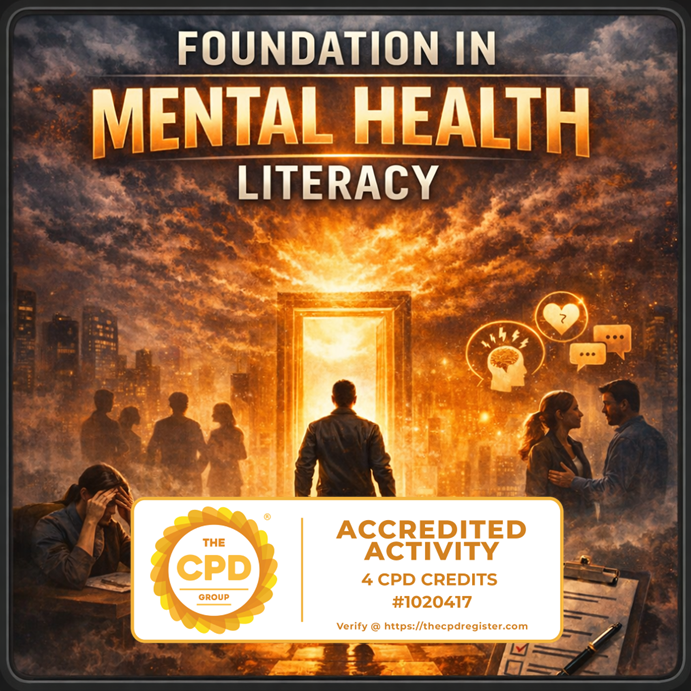
FMHL establishes the conceptual foundations required for all later learning. It gives participants the language, clarity, and ethical boundaries needed to recognise early signs of overwhelm without stepping into clinical territory.
Core Concepts
- The Three Domains of Human Experience
- Emotional (everyday feelings, regulation, interpersonal cues)
- Mental Health (patterns of distress, functioning, coping)
- Crisis (safety, risk, acute overwhelm)
- Stress vs distress vs crisis
- Early indicators of overwhelm
- Safe, non‑clinical communication
- The Step Up / Step Back / Refer model
- Role clarity and ethical boundaries
Why This Layer Comes First: FMHL prevents misinterpretation, overreach, and accidental harm. It ensures all learners begin with the same conceptual map and safety rules.
4 CPD CREDITS
Emotional Literacy First Aid (ELFA)
Purpose of This Layer
ELFA develops the interpersonal and emotional skills required to support someone in early distress. It focuses on emotional literacy, regulation, and safe communication.
Core Competencies
- Emotional identification and mapping
- Understanding emotional triggers and patterns
- Micro‑skills for grounding, listening, and validation
- Non‑clinical boundaries
- Early‑stage support and prevention
- Recognising when emotional distress becomes mental distress
Relationship to FMHL
FMHL provides the conceptual map; ELFA provides the interpersonal tools. Without FMHL, ELFA skills risk being used without context. Without ELFA, later mental health support risks becoming mechanical or unsafe.
4 CPD CREDITS

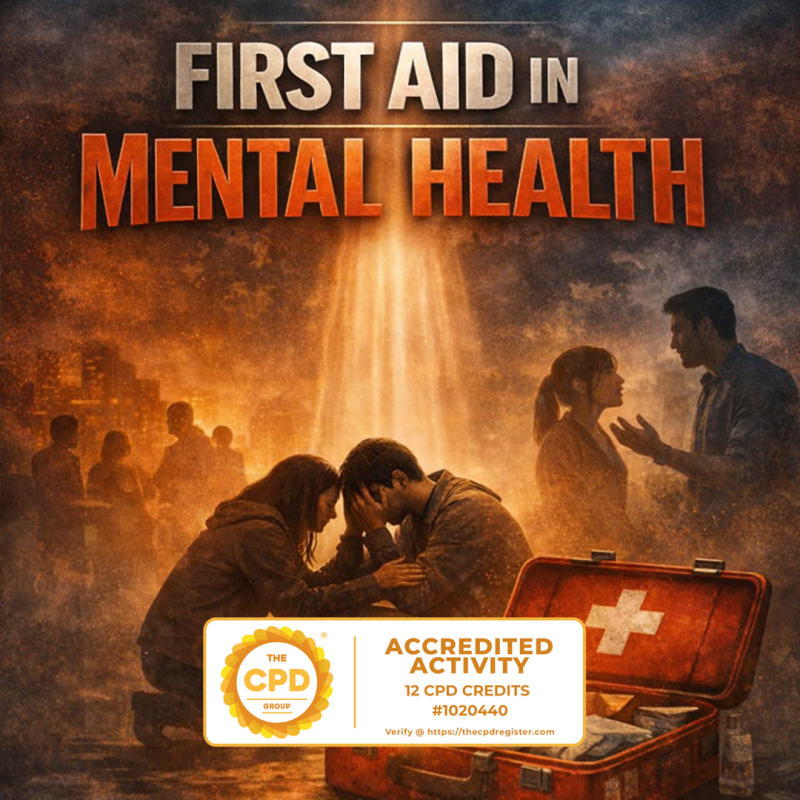
First Aid in Mental Health (FAinMH)
Structured Support for Mental Distress
Purpose of This Layer
FAinMH introduces structured, non‑clinical frameworks for recognising and responding to mental distress. It bridges everyday emotional support with crisis‑adjacent skills.
Core Competencies
- Recognising signs of mental distress
- Understanding patterns of functioning
- Supportive response frameworks
- Non‑clinical triage and referral pathways
- Ethical communication in mental health contexts
- Understanding limits of role and scope
Relationship to Earlier Layers
- FMHL provides the literacy.
- ELFA provides the emotional skills.
- FAinMH integrates both into structured support.
12 CPD CREDITS
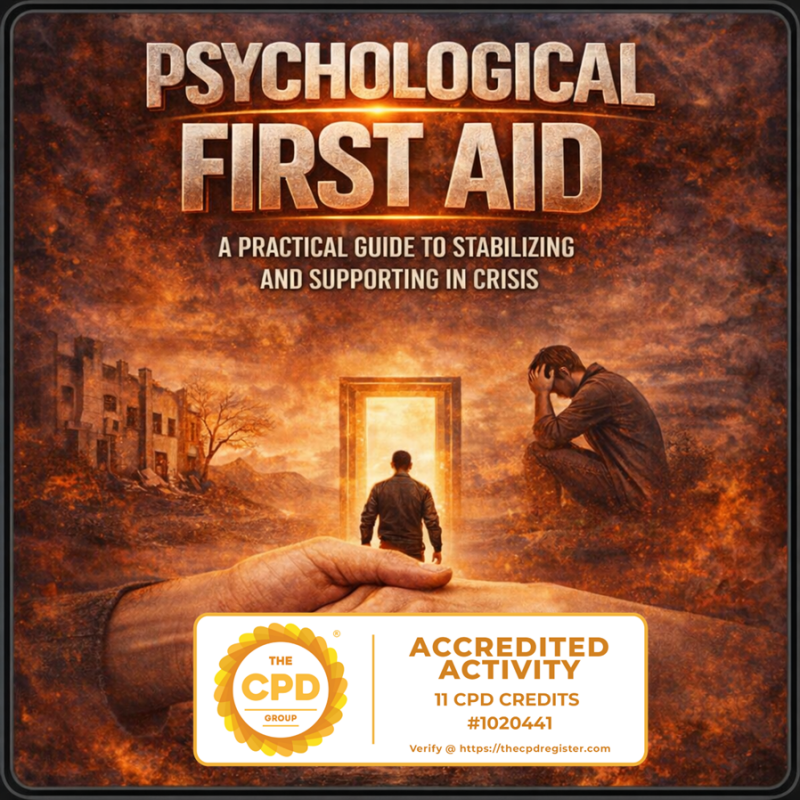
Psychological First Aider
Immediate Stabilisation and Trauma‑Aware Crisis Response
Purpose of This Layer
PFA equips learners with the skills to support someone experiencing acute distress or crisis. It focuses on safety, stabilisation, and trauma‑aware communication.
Core Competencies
- Immediate crisis stabilisation
- Safety, comfort, and practical support
- Trauma‑aware communication
- Short‑term, non‑clinical crisis intervention
- Recognising red flags and risk indicators
- Knowing when to escalate to emergency services
Relationship to Earlier Layers
PFA assumes:
- FMHL’s conceptual clarity
- ELFA’s emotional regulation and micro‑skills
- FAinMH’s structured support frameworks
11 CPD CREDITS
.
PROFESSIONAL SUSTAINABILITY
Boundaries & Burnout Prevention for Care Staff (BBPCS)
Ethical Practice, Role Protection, and Long‑Term Resilience
Purpose of This Layer
BBPCS consolidates all prior learning and focuses on the sustainability of the helper. It protects practitioners from burnout, role drift, and emotional over‑involvement.
Core Competencies
- Boundary setting in support roles
- Burnout prevention and recovery strategies
- Ethical sustainability
- Role clarity and self‑protection
- Managing emotional load
- Recognising compassion fatigue
Relationship to Earlier Layers
This capstone layer ensures that the skills learned across the ecosystem can be used safely and sustainably over time.
THE ECOSYSTEM AS A WHOLE
A Vertical Learning Arc, Layer Course Focus Outcome
1 FMHL, 2 ELFA, 3 FAinMH, 4 PFA & 5 BBPCS
4 CPD CREDITS