Advanced Care Staff Professional Development Pathway
The Advanced Care Staff Pathway builds practical, trauma‑aware skills for support workers in complex care settings. Each micro‑course strengthens communication, safety, ethics, and emotional resilience for confident, person‑centred practice.
Trauma‑Informed Care for Support Workers
This micro-course aims to equip support workers and frontline care staff with practical strategies for recognising and responding to the impacts of trauma within non-clinical settings. Through interactive learning, participants will explore the effects of trauma on behaviour and communication, acquire trauma-aware communication techniques, and learn to maintain emotional safety for clients. By fostering a respectful and empathetic approach, support workers will enhance their understanding of trauma-informed care and improve their interactions with clients, fostering recovery and dignity in the process.
Understanding Behaviour Through a Support Lens
his micro-course equips support workers with the skills to interpret behaviour as a form of communication rather than a problem to be solved. Participants will delve into the influence of stress, trauma, unmet needs, and environmental factors on behaviour and explore how to apply supportive responses that uphold dignity and human rights.
The course is practical, focusing on real-life applications and encouraging immediate integration of learning through micro-exercises and quizzes, enhancing everyday interactions in care settings.

Professional Boundaries in Care Environments
This micro-course aims to enhance the understanding of professional boundaries within care environments. Participants will explore role clarity, ethical communication, and strategies for recovering from boundary drift, ultimately fostering team accountability.
By engaging in practical exercises and reflective discussions, care staff will learn how effective boundaries protect their emotional safety and promote client wellbeing. This trauma-aware course equips participants to apply these concepts directly within their roles, fostering a culture of trust and respect in their workplace.
Mental Health First Response (Non‑Clinical)
This course is designed to equip support workers with essential skills for recognising and responding to mental distress in everyday care settings. Participants will learn how to identify early signs of distress, apply grounding techniques, utilise empathetic communication, and understand ethical referral pathways.
This trauma-aware and rights-aligned course focuses on practical skills that can be applied in real-life situations. Through a combination of micro-exercises and quizzes, participants will leave with increased confidence in their ability to provide first-response support while maintaining ethical boundaries.

Communication Skills for Care & Support Roles
This micro-course aims to enhance communication skills for support workers in care environments. Participants will learn strategies to improve clarity, foster empathy, and ensure emotional safety in interactions with clients. The course emphasises building trust, minimising misunderstandings, and communicating effectively within diverse care settings. It is trauma-aware and rights-aligned, focusing on practical application of concepts in non-clinical language for accessibility. Through interactive exercises and assessments, learners will develop the skills necessary for effective person-centred dialogues and collaborative communication in their roles

Working with Vulnerable People: Ethics & Safety
This micro-course is designed for support workers in disability, aged care, and community services, focusing on the critical ethical considerations in high-risk environments. Participants will explore themes of vulnerability, duty of care, and ethical decision-making.
Through interactive exercises and quizzes, learners will strengthen their skills in navigating complex scenarios with professionalism and compassion, ensuring the safety, dignity, and rights of vulnerable individuals are upheld.
The course also emphasises trauma-informed principles in practice.
Self‑Care & Emotional Regulation for Care Staff
This micro-course is designed for frontline and supervisory care professionals to enhance their emotional resilience through practical, trauma-aware self-care strategies.
Participants will learn to recognise stress signals, implement grounding techniques, and cultivate sustainable self-care routines. Emphasising evidence-based approaches, the course equips staff with skills to remain calm and empathetic during challenging situations, ultimately preventing burnout and promoting overall wellbeing.
Each module contains concise, actionable content and micro-exercises tailored to the demanding nature of care roles.

Documentation & Reporting for Support Workers
This micro-course aims to enhance the written communication and record-keeping capabilities of support workers in various care settings. Participants will learn the principles of quality documentation practices, including how to write clear and objective notes while adhering to confidentiality and compliance requirements.
The course focuses on applying ethical and professional standards to ensure safety and accountability, rounding off with practical exercises and assessments to solidify knowledge.
By the end of the course, learners will be equipped with confidence in their professional documentation skills.
Cultural Awareness & Inclusive Care
This micro-course is designed for care staff to deepen their understanding of cultural diversity and enhance person-centred care practices.
Participants will explore the principles of cultural awareness, recognise the significance of cultural influences on communication and care preferences, and learn to apply inclusive practices.
Through interactive modules incorporating practical exercises, learners will develop the skills necessary to honour the identities and experiences of clients from diverse backgrounds, fostering trust, safety, and belonging across care settings.
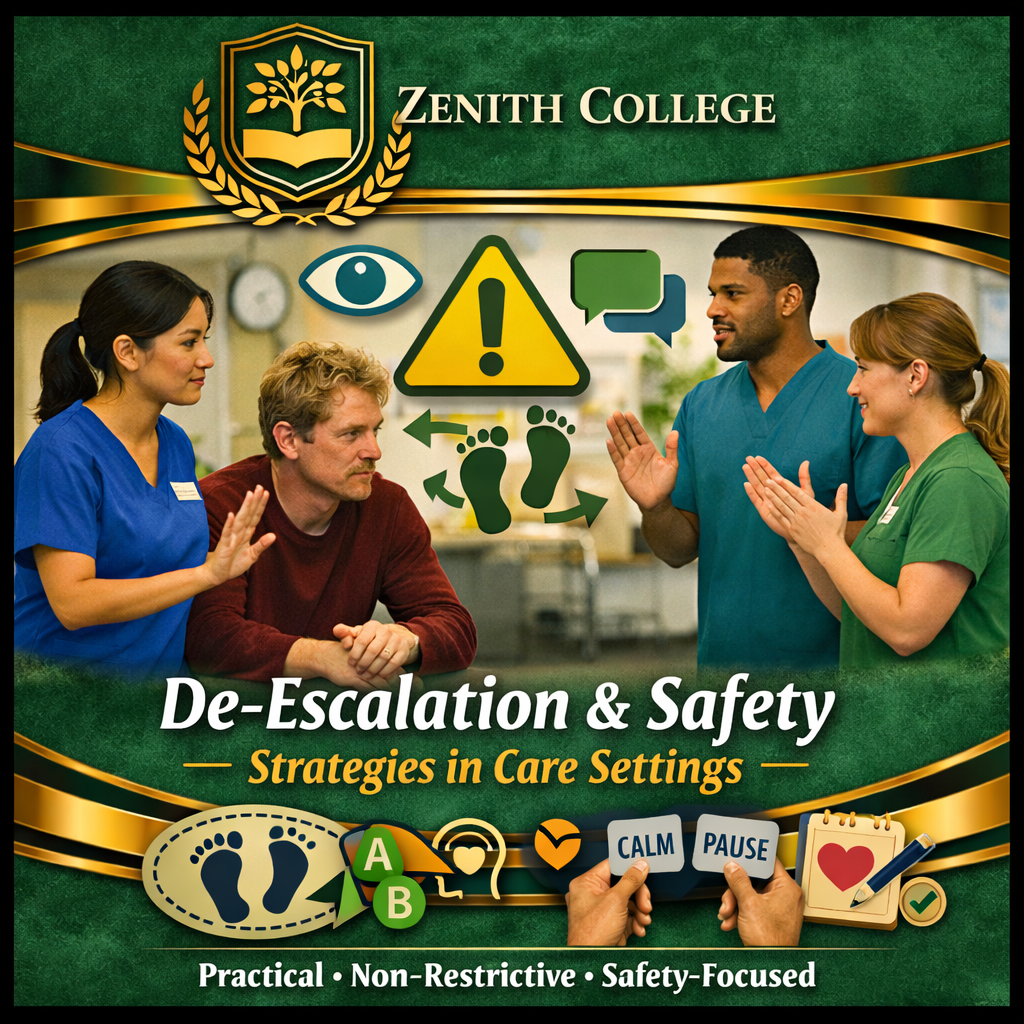
De‑Escalation & Safety Strategies in Care Settings
This micro-course equips support workers in care settings with practical, non-restrictive de-escalation strategies for managing heightened situations while ensuring safety.
Participants will learn to identify early signs of escalation, utilise supportive communication techniques, and apply safety-first positioning.
Emphasising ethical, person-centred, and trauma-aware practices, this course aims to enhance support workers' confidence and competence, enabling them to respond effectively to challenging situations within everyday care environments.
Safe Practice Essentials for Disability Support Workers
This practical, awareness‑level program gives disability support workers the essential skills to deliver safe, respectful, and high‑quality everyday care. The course strengthens confidence, safety, and professionalism across the five core areas that matter most in support work.1. Hand Hygiene Awareness for Support Workers, 2. Medication Support Awareness for Disability Care Workers, 3. Manual Handling Awareness for Disability Support Workers, 4. Bowel Care Awareness for Support Workers, 5. Legal Responsibilities in Disability Support